
Seller guide
Pad-Mount vs Dry-Type: What You Have
The fastest way to identify your unit, and why the answer changes what it is worth.
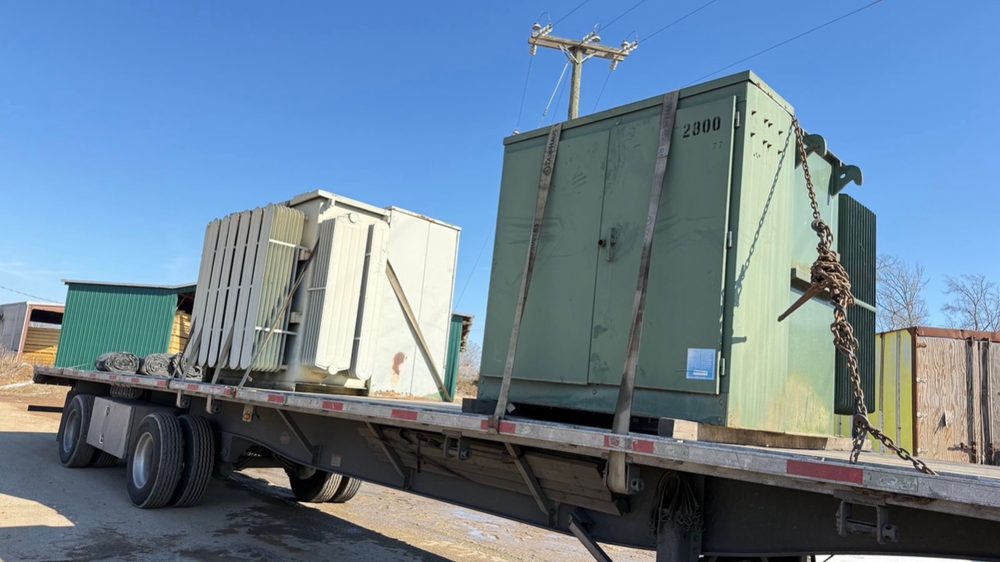
Identifying a pad-mount
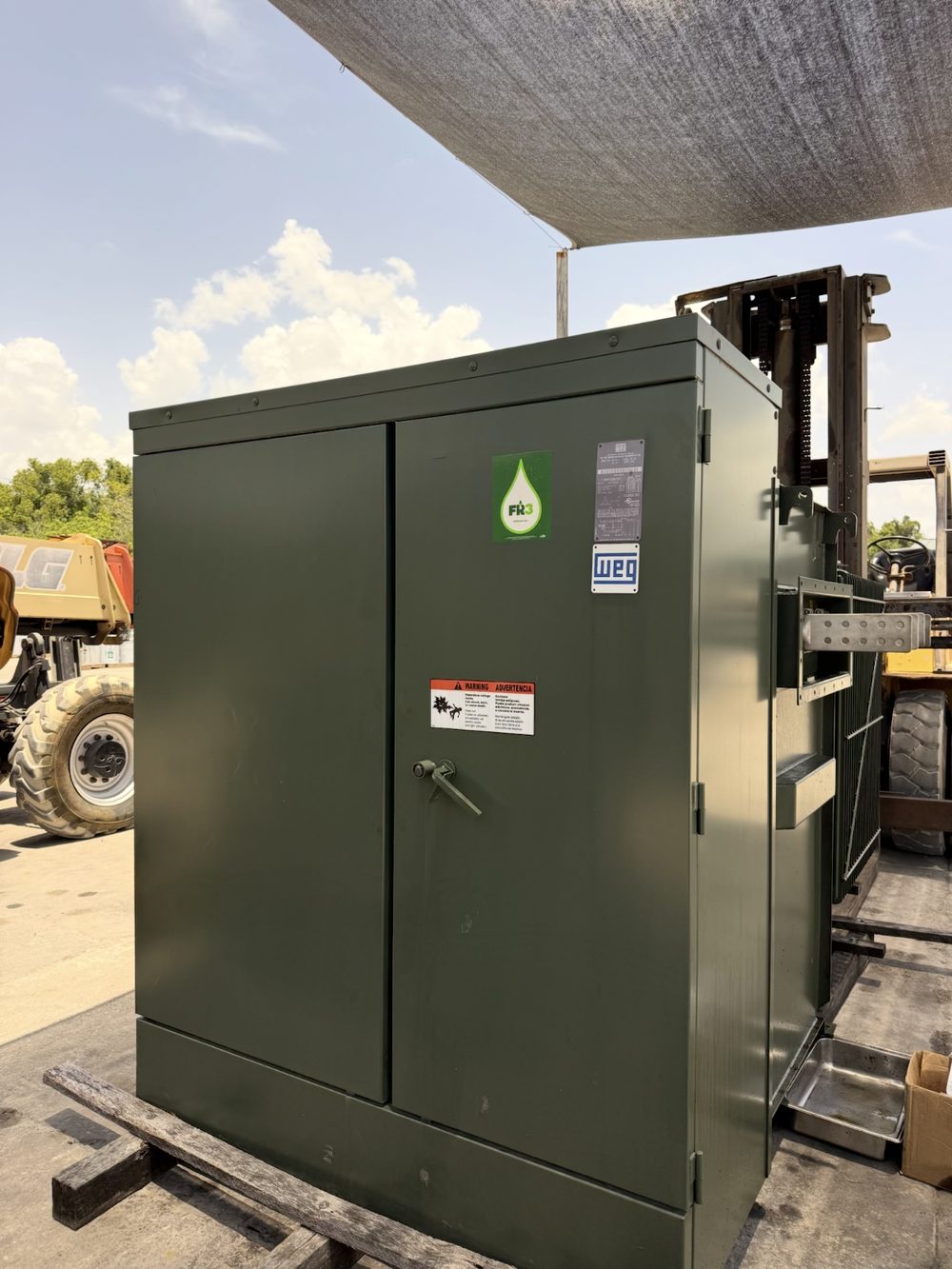
A pad-mount sits outdoors on a concrete pad inside a locked steel cabinet, usually green or gray, roughly the size of a large appliance or bigger. It is oil-filled, weather-rated and self-contained, and it typically feeds a building or group of buildings from a utility primary.
Open the cabinet doors and you will see either dead-front elbow connections or live-front exposed terminals. Either way, the tank inside is sealed and contains fluid. If you can see a fluid level gauge, a pressure relief device or a drain valve, you have an oil-filled pad-mount.
Identifying a dry-type
A dry-type lives indoors, in a mechanical room, electrical closet or on a mezzanine, in a ventilated sheet-metal enclosure with visible louvers. There is no fluid, no gauge and no drain valve. Look through the louvers and you can often see the coils themselves, sometimes with visible copper or aluminum windings and epoxy or varnish coating.
Cast-coil units are a subset of dry-type where the windings are encapsulated in solid epoxy. They are heavier, more robust and worth more than ventilated dry-types of the same rating.
What the difference means for price
Per kVA, oil-filled pad-mounts generally carry more metal and more resale demand than ventilated dry-types, and they are the most commonly traded class in the used market. Dry-types have no fluid to handle, which simplifies logistics but also removes the PCB question entirely from the transaction.
Small dry-types below roughly 75 kVA are usually best sold as a lot rather than individually, because the handling cost per unit is similar regardless of size. Cast-coil units are worth quoting individually at almost any rating.
Units that are neither
If your transformer is bolted to a wooden pole it is a pole-mount distribution unit, typically single-phase and best sold in bulk lots. If it is a large tank with external radiator banks and a control cabinet, it is a substation or power transformer and likely the most valuable item on the site. If it is a transformer bolted into a larger assembly, it is a unit substation and we buy it with the transformer attached.
We buy every one of these classes. Identifying the class simply tells us which resale channel applies.
Request a Quote
Send a nameplate photo for a same-day number.
More seller guides
Everything we know about selling transformers
Transformer classes we buy
Transformers only
Pad-Mount Transformers
Three-phase padmounts pulled off concrete pads at retail, industrial and campus sites.
Oil-Filled Transformers
Liquid-filled units including mineral oil, FR3 and silicone fluid, with or without radiators.
Dry-Type Transformers
Ventilated and sealed dry-type units from mechanical rooms, vaults and indoor substations.
Substation Transformers
Station-class units from plant substations, utility yards and industrial services.
Power Transformers
Large power transformers from utilities, generation sites and heavy industry.
Distribution Transformers
Pole-mount, pad-mount and single-phase distribution units, including bulk lots.
Unit Substation Transformers
Transformer sections of unit substations, close-coupled or separated.
Cast-Coil Transformers
Epoxy cast-resin units from harsh, humid and industrial environments.
Network Transformers
Submersible and vault-type network transformers from downtown grid systems.
Transformer Scrap
Burned, gutted, cored and unrepairable transformers bought for metal content.
Questions we get asked
Straight answers
Which is worth more, pad-mount or dry-type?
Per kVA, oil-filled pad-mounts usually. But condition, voltages and winding material can easily reverse that in a specific case.
Do you buy small dry-type units?
Yes, and they generally work best combined into a lot so one pickup covers several units.
How do I tell a cast-coil apart from a ventilated dry-type?
Cast-coil windings are encapsulated in solid epoxy with no visible individual conductors, and the unit is noticeably heavier for its rating.
Questions about your unit?
Call or text a nameplate photo. No obligation.
Request Your Quote
Nationwide, upfront payment, freight covered.