
Seller guide
Copper vs Aluminum Windings and Value
Winding material is one of the largest single value factors in a used transformer, and it is often not obvious.
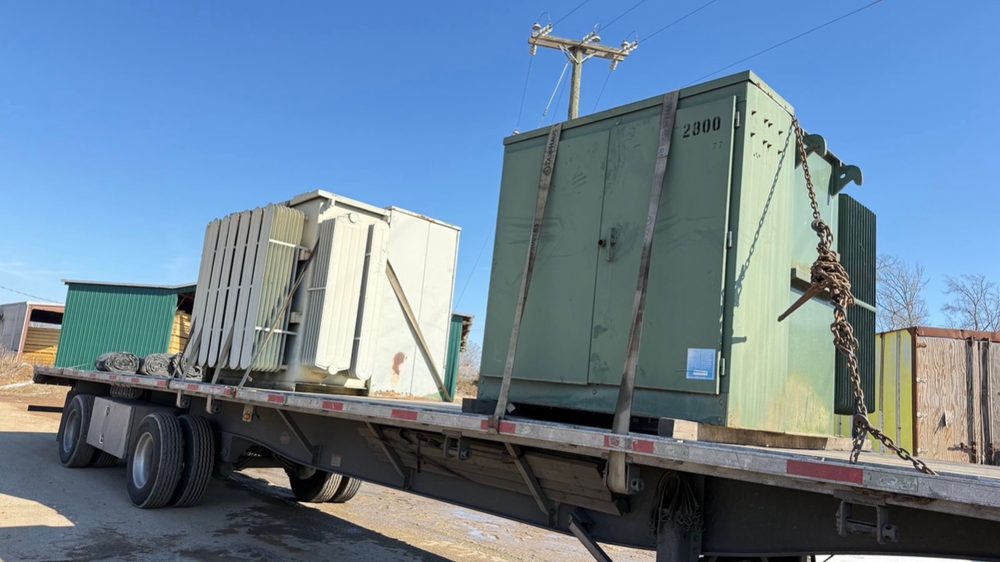
Why the difference matters
Copper conducts better than aluminum, so a copper-wound transformer achieves the same rating with less winding volume and generally runs cooler. It is also worth considerably more as metal. Both effects push the same direction: copper-wound units command a premium in the used market, and on a large unit the difference can be substantial enough to change the whole economics of a sale.
Aluminum-wound units are not undesirable. They were built in enormous numbers, they perform to specification, and they resell perfectly well. They simply price lower.
How to tell which you have
Start with the nameplate. Some plates state the winding material outright, sometimes abbreviated as CU or AL. Where the plate is silent, era and manufacturer give strong hints: aluminum became common in distribution transformers from the 1960s onward as copper prices rose, while premium and specification-driven units continued to be copper.
On a dry-type you can often see the windings through the louvers and judge by colour, though varnish and coating can confuse this. On an oil-filled unit you cannot see the windings at all, and weight relative to rating becomes the practical indicator. This is one of the things we assess at inspection.
What it does not change
Winding material does not determine whether we buy the unit. We buy both, at every rating and in every class. It affects the number, not the interest.
It also does not override the more important factors. A copper-wound unit on an unusable voltage combination is still harder to place than an aluminum-wound unit at a standard 13.2kV to 480Y/277V pair. Resale demand comes first; winding material adjusts from there.
Request a Quote
Send a nameplate photo for a same-day number.
More seller guides
Everything we know about selling transformers
Transformer classes we buy
Transformers only
Pad-Mount Transformers
Three-phase padmounts pulled off concrete pads at retail, industrial and campus sites.
Oil-Filled Transformers
Liquid-filled units including mineral oil, FR3 and silicone fluid, with or without radiators.
Dry-Type Transformers
Ventilated and sealed dry-type units from mechanical rooms, vaults and indoor substations.
Substation Transformers
Station-class units from plant substations, utility yards and industrial services.
Power Transformers
Large power transformers from utilities, generation sites and heavy industry.
Distribution Transformers
Pole-mount, pad-mount and single-phase distribution units, including bulk lots.
Unit Substation Transformers
Transformer sections of unit substations, close-coupled or separated.
Cast-Coil Transformers
Epoxy cast-resin units from harsh, humid and industrial environments.
Network Transformers
Submersible and vault-type network transformers from downtown grid systems.
Transformer Scrap
Burned, gutted, cored and unrepairable transformers bought for metal content.
Questions we get asked
Straight answers
How much more is a copper-wound transformer worth?
It varies with size and rating, but the premium is real and grows with the unit. Send the nameplate and we will price yours specifically.
My nameplate does not say copper or aluminum. What now?
We assess it from era, manufacturer, weight and construction, and confirm at inspection.
Do you buy aluminum-wound units?
Yes, routinely, in every class and rating.
Questions about your unit?
Call or text a nameplate photo. No obligation.
Request Your Quote
Nationwide, upfront payment, freight covered.